Skill Vault · Plan and decide
Think through an idea with Grill Me
Turn a loose idea into decisions through rounds of questions.
An idea and the context you can share about it.
Skill name /grill-me
Your next step
Try it for yourself
You’ll need: An idea and the context you can share about it.
Paste into an AI conversation after adding your own context.
This is a one-off starter for the approach. Installing the full Skill adds its complete instructions.
Grill me on this idea in rounds. Ask the whole decision frontier each round, include your recommended answer, distinguish facts from decisions, and continue until no material branch remains assumed. Idea: [describe it].
What happens nextLater questions build on your answers, and you can explain the choices you made.
Use it again
Add the full Skill.
The starter lets you try the approach. Installation adds the complete instructions to your AI coding tool.
Copy the setup instructionsFor Codex or Claude Code on your computer
Your next step
Ask your agent to help you install it
You’ll need: Node.js with npx, Git, and the agent you choose. A project folder where you want the Skill available.
Paste this into Codex or Claude Code with your project open. Your agent will help you review and install the package.
Review files and permissions before accepting an install. Adding a Skill does not run it.
Help me install /grill-me from MattEspo23/skills v0.1.2 in this project.

Review the package instructions and supporting files first. Include these Skills: grill-me, grilling.

Use the command for the agent I am using:
Add to Codex:
npx skills@latest add 'MattEspo23/skills#v0.1.2' --skill grill-me --skill grilling --agent codex --copy

Add to Claude Code:
npx skills@latest add 'MattEspo23/skills#v0.1.2' --skill grill-me --skill grilling --agent claude-code --copy

Show me where the files will go before making changes. Preserve existing Skills and customizations. Stop if the release, supporting Skills, or target agent cannot be verified. Do not run the Skill or change external services during setup.

After installation, explain how I can use /grill-me and what access it needs.
What happens nextYour agent should review and add /grill-me, /grilling, then explain how to use /grill-me. Stop if a dependency or version cannot be verified.
Includes supporting Skills: /grilling. Source version: v0.1.2.
Prefer a terminal command?
Add to Codex
npx skills@latest add 'MattEspo23/skills#v0.1.2' --skill grill-me --skill grilling --agent codex --copy
Add to Claude Code
npx skills@latest add 'MattEspo23/skills#v0.1.2' --skill grill-me --skill grilling --agent claude-code --copy
Installing copies the instructions into your chosen agent. It does not run the Skill or configure project tools.
Keep the package’s supporting files, LICENSE and NOTICE together with the Skill instructions.
Full notes & source materialThe complete original text, examples and reference details.
These are the complete original notes. Planned videos and services mentioned here may not be available yet; the actions above reflect what you can use on this site now.
Turn a loose idea into real decisions through a rigorous conversation in question rounds.
Watch
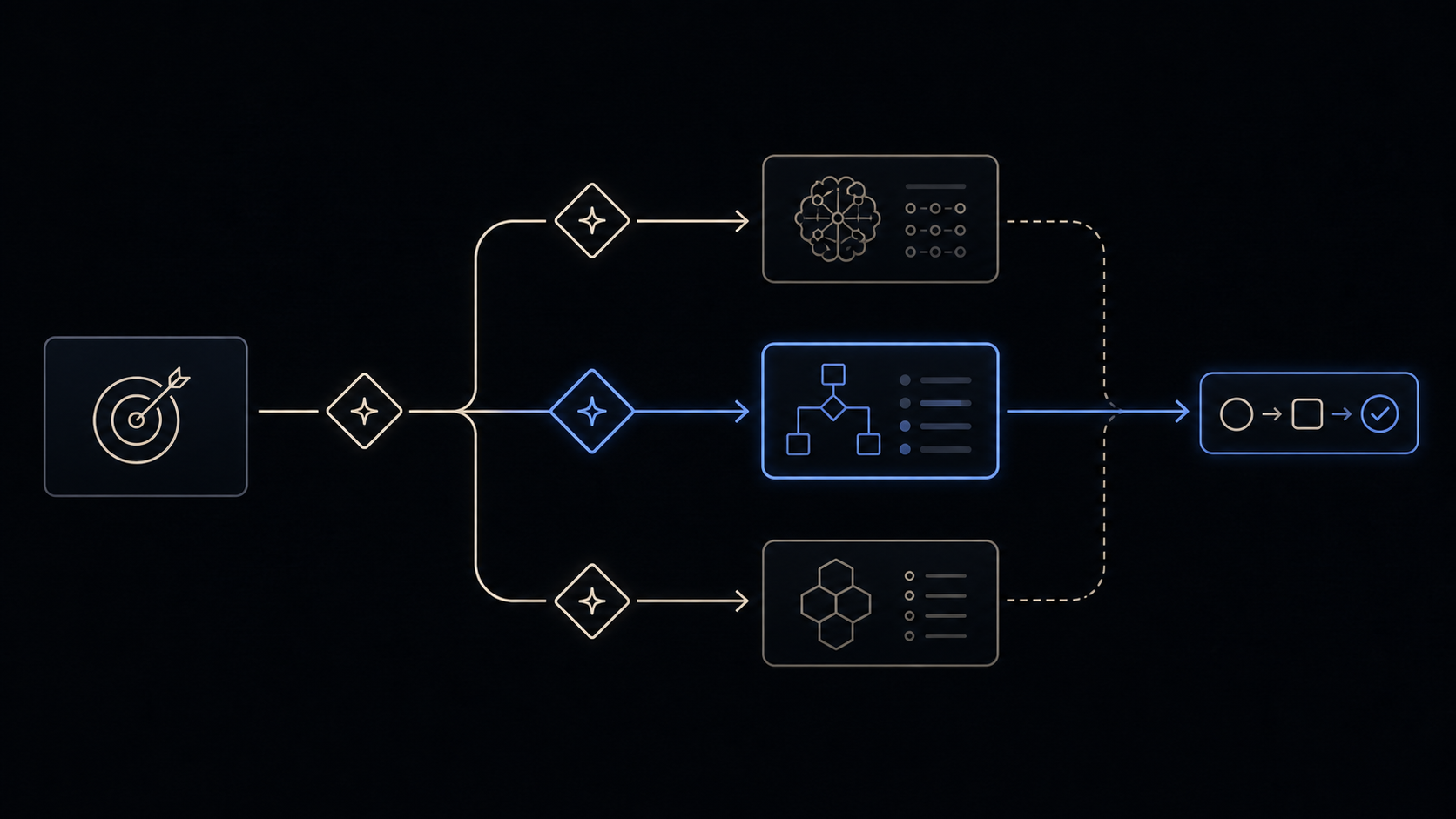
Skill Vault video planned · Video planned
Install
Public release v0.1.2 — install the latest source or pin the tested release.
Install latest
npx skills@latest add MattEspo23/skills --skill grill-me
Reproducible install
npx skills@latest add 'MattEspo23/skills#v0.1.2' --skill grill-me
Clean installs are verified for Codex and Claude Code. The installer copies editable files into the selected agent; review every Skill before giving it tool access.
This is the public, editable adapted baseline. Its deeper Espo-specific revision and Skill Vault video are planned; the released source can be installed now.
What it does
grill-me takes a loose idea and interviews you until it has real decisions in it. You do not need a worked-out plan to start — producing one is what the session is for. It asks in rounds: each round is the whole frontier — every question whose prerequisites you have already settled — so you are never asked something that hinges on an answer it hasn't heard yet.
It is stateless. It writes no files and leaves no workspace behind. The only thing it leaves is a sharper version of the idea, in your own head.
When to reach for it
You invoke this by typing /grill-me — the agent won't reach for it on its own. Start it in a fresh conversation, not on top of a plan you already had an agent write.
Reach for it as soon as you have an idea worth taking seriously — a feature, a product direction, a business call, a piece of writing — and long before you have worked out what it involves. Vagueness is not a reason to wait; it is the thing the session eats. If you can already specify the thing precisely, you don't need to grill it.
Which of the three grilling skills you want depends on what is in front of you:
- Anything, anywhere —
grill-me. It needs no repo and writes no files, and the subject doesn't have to be code. - A codebase to align against — grill-with-docs. The same interview, but stateful: it reads your code and keeps what it learns in
CONTEXT.mdand ADRs. - Too big for one session — wayfinder. It charts the effort as a map and runs grilling sessions inside it.
Leave plan mode off. Plan mode primes the agent to rush toward producing a plan, which is the opposite of staying in inquiry.
It's a conversation, not an interview
The skill asks the questions, but you own the scope. That is the part people miss, and it separates a session that turns an idea into decisions from one that produces confident nonsense.
The failure mode is passivity — answering "agreed, agreed, agreed" for forty questions and coming out with a plan the agent wrote and you nodded at. It feels productive because it was long. Nothing was actually decided, and the result carries a certainty it hasn't earned.
Being active means steering. Push back on a question pitched beneath the fidelity you need. Say when the scope is drifting. Answer "I don't know" and mean it. This skill is built to aid an engineer, not to replace one: what comes out tracks the quality of your answers, not the number of questions asked.
The opposite error is real but rarer — staying in the interview so long you never reach code.
Grillable and ungrillable
Some questions can be answered by talking. Others can't, and no amount of grilling will get you there.
"One long form or three pages?" and "how should this interaction feel?" are ungrillable — they need something to react to. When you hit one, stop grilling. Build the throwaway version with prototype, look at it, then come back and answer in one line.
Talking your way through an ungrillable question is where sessions balloon. The agent keeps rephrasing, you keep guessing, and the scope grows to fill the uncertainty.
It's working if
- You disagree with something. A session with no pushback from you is a session you didn't need.
- Questions arrive in a few rounds rather than one long drip, and later rounds clearly build on what you said earlier.
- You end up somewhere you didn't expect, because a question surfaced a decision you had been making implicitly.
- At the end you could defend each choice to someone who wasn't there.
Common questions
How many questions should I expect, and how do I know when it ends? Count rounds, not questions. Forty-six questions across four rounds is an ordinary session. It ends when the frontier is empty — every branch visited, nothing left silently assumed.
It asked me two hundred questions. What went wrong? Usually the scope was too large. Ask the agent to break the work into smaller pieces first, then grill each one. Very long sessions also drift into the dumb zone, where the context window is full enough that the questions get worse.
Can I go back to one question at a time?
Yes. Add this to your global CLAUDE.md:
When grilling, ask one question at a time.
What if I genuinely don't know the answer? Say so. "I don't know" is a real answer, and a question you can't answer is usually a sign to prototype rather than to guess.
Do I start a fresh session before writing the spec? No. The value of the session is the context you just built. Hand the same conversation straight to to-spec.
Does the model matter? More than for most skills. Grilling leans on the model's own sense of how systems break, so give it your best one. Implementation mostly follows context and tolerates a cheaper model.
Where it fits
grill-me is a standalone you can run anywhere, on anything. Being stateless is what makes it portable: no repo, no workspace, no setup, and no assumption that the idea is even about software. People point it at business decisions, at writing, at what to do next — anything that won't sit still in their head.
That portability is the whole difference from grill-with-docs, which runs the same interview but reads a codebase to align against and records what it learns as CONTEXT.md and ADRs. Both sit on the grilling primitive; grill-me is the user-invoked front door that carries nothing with it.
If what you grilled does turn out to be software, you can hand the same conversation to to-spec and carry on into the build flow — an option, not the point of the skill. When you're unsure which flow fits, ask-espo routes you.
Try it once
Use the core behavior in one conversation before installation. The repeatable Skill package is the primary path when you want the behavior available across future work.
Grill me on this idea in rounds. Ask the whole decision frontier each round, include your recommended answer, distinguish facts from decisions, and continue until no material branch remains assumed. Idea: [describe it].
Source & license
Released in EspoAI Skills v0.1.2; adapted from mattpocock/skills v1.2.3. The released package is skills/productivity/grill-me/SKILL.md.
The public package is MIT-licensed and pinned here to the exact release commit. View the released EspoAI source
The adapted baseline preserves the upstream copyright, MIT permission notice, and pinned provenance. View the original pinned source
Skill package files
The full Skill text as copied from content/skill-vault/skills/grill-me/. Supporting agent configuration files stay in that folder.
SKILL.md
---
name: grill-me
description: A relentless interview to sharpen a plan or design.
---

Run a `/grilling` session.
Keep going